
Sen. Murray Hears AI House's Case for 'Small Tech' at Seattle Roundtable
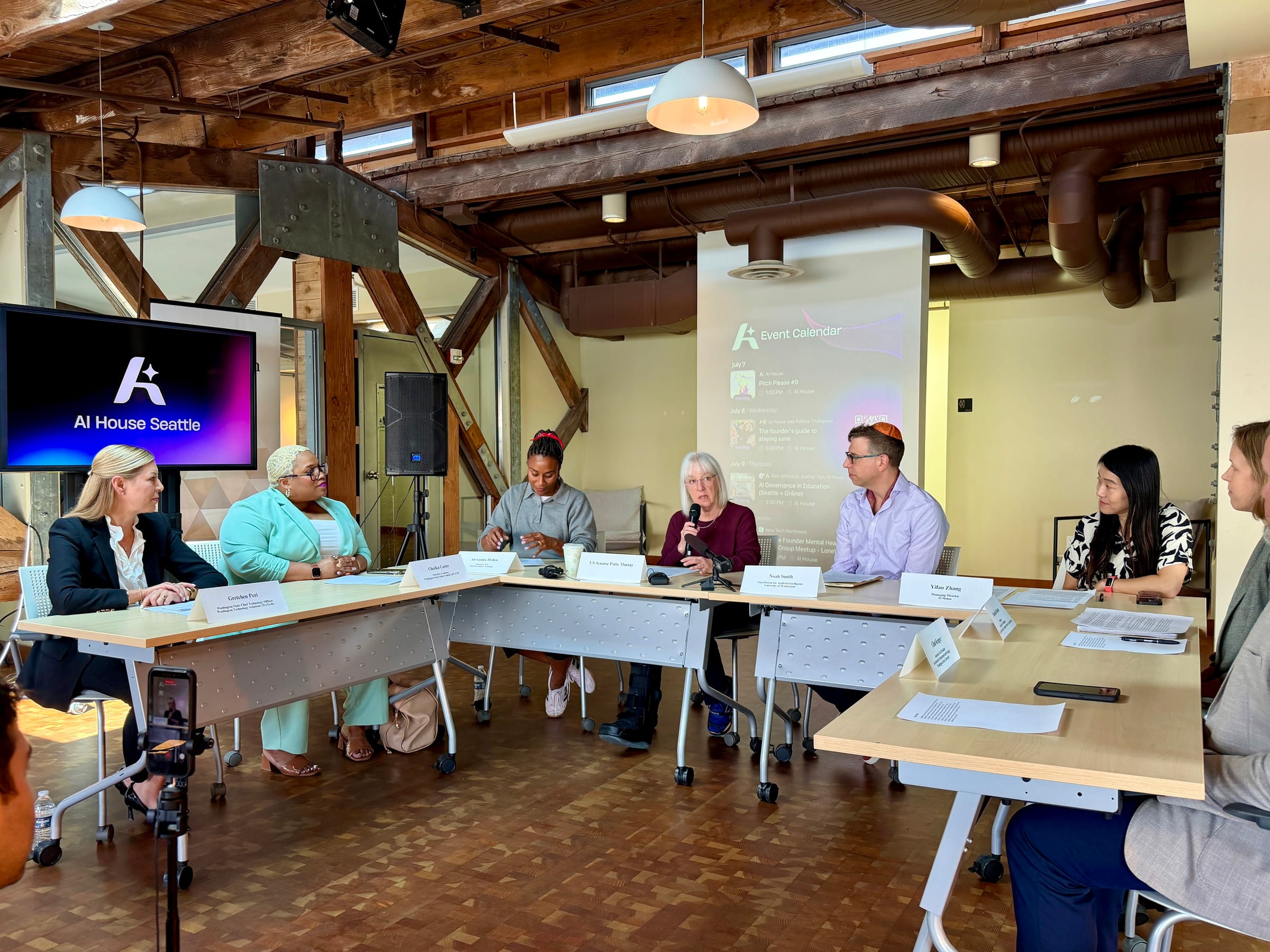
U.S. Sen. Patty Murray, D-Wash., convened an AI policy roundtable this week at AI House, a Seattle startup hub for early-stage AI companies. The session brought together researchers, labor representatives, and state government officials to discuss AI regulation.
Murray said she came to the roundtable to learn more about the benefits and challenges of artificial intelligence, as well as its impact on workers.
Yifan Zhang, managing director of the AI House Incubator, joined the discussion and said AI regulation must distinguish between "Big Tech" and "Small Tech," warning that one-size-fits-all rules risk entrenching the largest companies at the expense of startups.
Zhang said that in the age of AI, “Small Tech” — solo founders and tiny teams building focused products — can move faster and create more widely shared value than large incumbents weighed down by bureaucracy. She pointed out AI House Incubator startups building boutique retail tools (Suede), therapist back‑office automation (Aria), and brand‑alignment services (Optimly). Her core warning to policymakers was that AI rules written for trillion‑dollar companies risk crushing these small innovators and entrenching Big Tech’s dominance.
Zhang also argued that startup employees share directly in that growth through equity, not just salary, which she said makes for a more resilient, worker-benefiting economy than one dominated by a handful of large firms.
Her request to Murray: any AI regulation should account for the different realities facing small startups versus large technology companies. Compliance requirements that a company like Microsoft can absorb — legal teams, licensing costs, audits — can be prohibitive for a five-person startup, she said, and could end up reinforcing the market position of the largest AI companies rather than checking it. Startup founders, she added, typically lack the lobbying resources that large tech companies have in Washington, D.C., making it less likely their perspective reaches lawmakers without a direct effort to include them.
"Please keep startups and founders in mind when enacting laws," Zhang said.
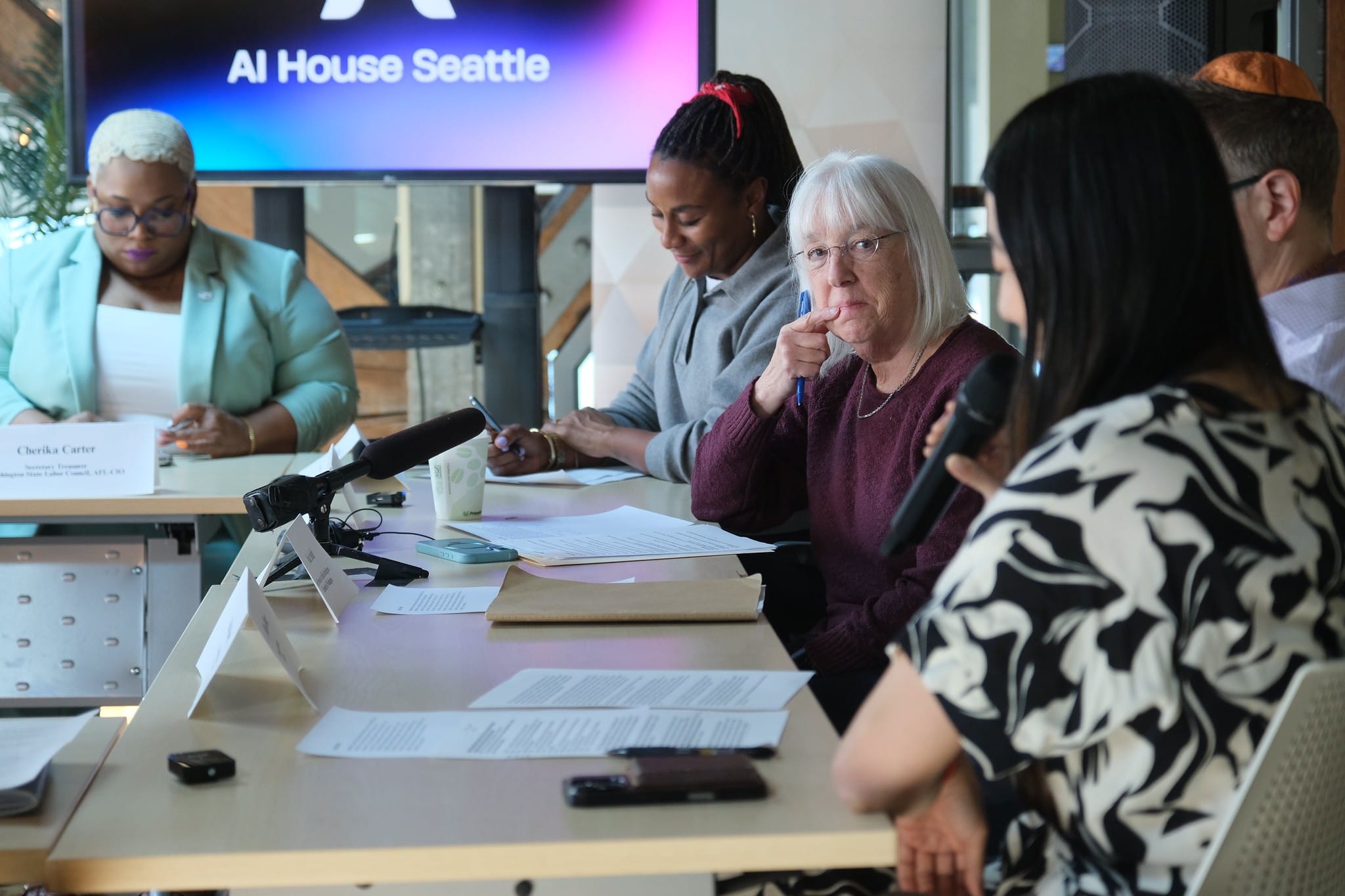
Yifan Zhang (right), managing director of AI House Incubator, speaks during a roundtable discussion at AI House in Seattle hosted by Sen. Patty Murray. (Photo via Office of U.S. Senator Patty Murray)
The roundtable also included Noah Smith, University of Washington Vice Provost for AI; Franziska Roesner, a UW Allen School computer security professor; Chad Kruger of Washington State University; Cherika Carter of the Washington State Labor Council, AFL-CIO; Alexandra Holien, interim CEO of Ada Developers Academy; and Gretchen Peri, Washington state's chief technology officer.
Smith argued that U.S. leadership in AI should be measured by how responsibly and openly it’s used for science, education, and public institutions — not just by model size, investment, or token sales. Roesner expressed concern about real harms from AI in the near-term, especially to vulnerable people, versus sci‑fi “doomsday” scenarios. She highlighted universities' role in training the next generation to build and use AI responsibly.
Kruger suggested that AI should be regulated by outcomes and context, not as one monolithic technology. Carter called for AI policies guaranteeing worker voice and shared benefits, while Holien described the risk of AI widening, not closing, the tech opportunity gap for underrepresented workers. Peri said safety and transparency are prerequisites for durable economic benefit.
Following the roundtable discussion, a reporter asked about rising electricity costs tied to data centers. That prompted Murray to call on companies to cover the cost of building out their own infrastructure.
Another reporter asked about the impact of Big Tech layoffs on Washington state's economy. Zhang noted the importance of enabling and educating workers to help start their own companies. More startups and more people getting into entrepreneurship can lead to a more robust economy, Zhang said.
"Instead of just two major companies here, I think we can have hundreds, thousands of smaller companies," she said. "And that is a much more vibrant, resilient ecosystem."
